
We all know people obsessed with power. Whether actual megalomaniacs or mere petty tyrants, they follow the same pattern. Optimize for the acquisition and exercise of power, and follow the letter – not the spirit – of the law.
Similarly, there are people obsessed with scale. Some obsess with the macro (large-scale) view; always making an effort to zoom out, take a 30,000-foot view, talk about "leverage points”, or say something about losing the forest for the trees. Then there are those who shrink to the micro scale, obsessing instead with minutia like self-improvement, biohacking, and parking ticket enforcement. They scale down their attention to maximally small units that provide a relative sense of power and control.
You should be careful not to become a habitual megalomaniac or pushover. You should exercise caution with your preference for micro or macro perspectives.
One way to play the game: mesolomania – the obsession with intermediate scales and, importantly, the avoidance of power struggles.
Mesolomaniacs intuitively build niches and bridges, and are excellent at playing long games. Those strengths, of course, come at a cost.
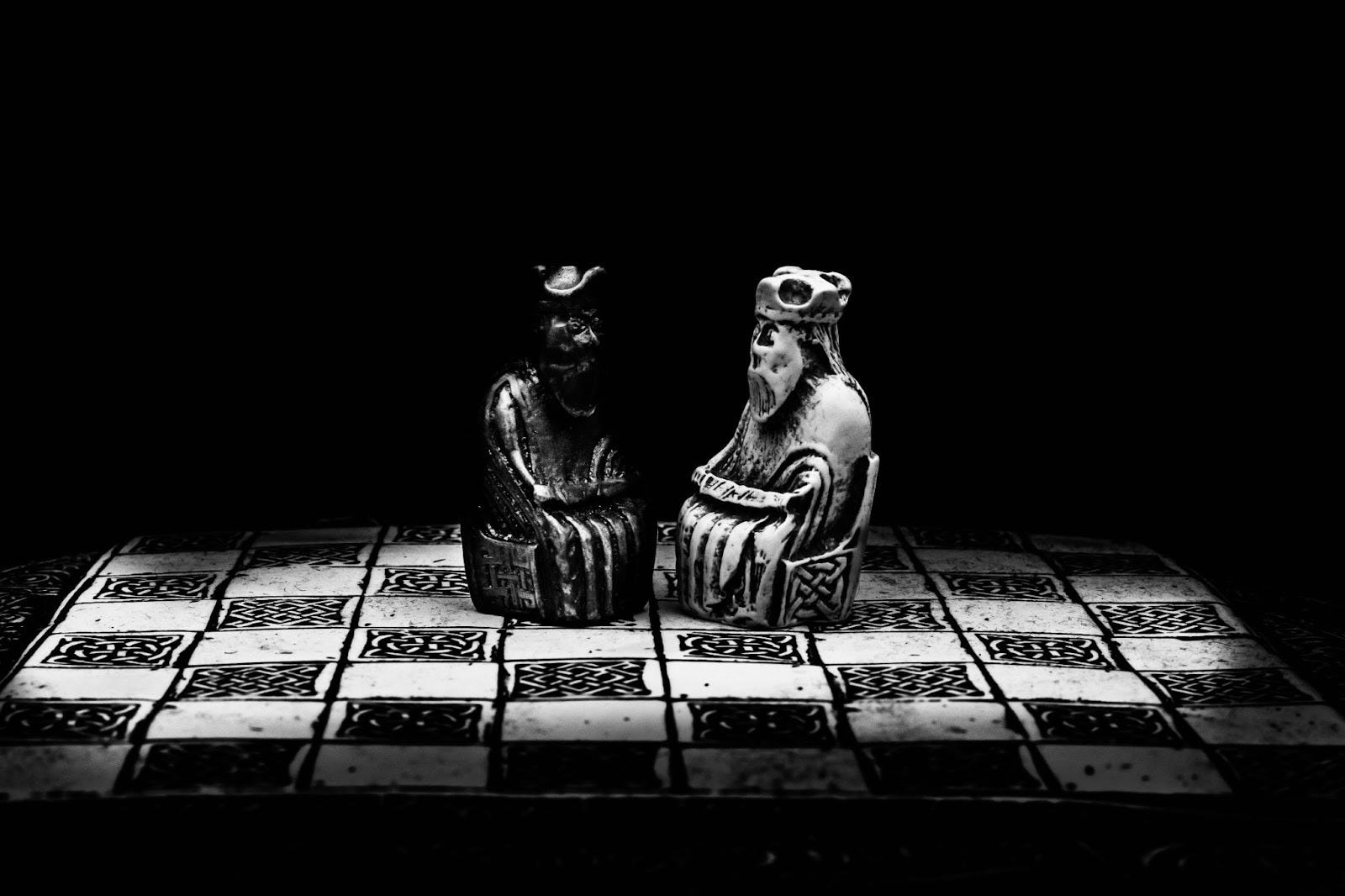
The agency gambit
This post isn’t about generalists, but the career of a generalist presents a good toy example to prime your intuition for the agency gambit. Generalists don’t have access to either the systemic levers (macro) or contextually optimal tools (micro) of specialists. They cannot act as independently or as powerfully.
Focusing on the middle ground costs agency.
For example, the Bank of Canada has the ability to set overnight interest rates that tilt the entire economy. Investment specialists, at the micro scale, know which financial instruments are optimal depending on the context. A generalist with a functional background in multiple domains, including finance, will know quite a bit about both of those things, but won’t ever be in a position to use them. Generalists sacrifice professional agency on both ends of the scale to develop richer perspectives.1
When played poorly, the agency gambit fails in a routine way: a lack of skill development. That’s why the term gambit is appropriate and not just a clickbaity Harvard Business Review coinage. Gambits are, by definition, suboptimal moves. You have to survive with less material until your opponent’s onslaught fizzles out and you can reap the positional rewards of your sacrifice.
Same goes in our toy example – generalists must accumulate enough knowledge, context, and literacy to compensate for their relative lack of skill / agency.
A mesolomaniac’s value is in the quality of their maps.
More broadly speaking, but still in the business landscape, obsession with the meso is about avoiding perspectival knee jerks like: “let’s zoom out” and “let’s double click on that”. Not only are those annoying NPC scripts, but a good map has a consistent scale. The micro or macro cannot accommodate each other, and the meso scale exists as a third point of view with a different set of pros and cons, like the ability to build relatively uncontested niches.
On being mid
Mesolomaniacs are, of course, mid. Legible excellence would be antithetical. Doing exceptionally well is only observable if there’s an existing benchmark to score yourself against. That immediately puts you in the realm of the macro or the micro, because at intermediate scales there are often not established metrics. For a mesolomaniac, what gets measured gets the selective incompetence treatment.
Mesolomaniacs are averse to competition, but don’t mind being adjacent to it. There’s a big difference between knowingly, wantingly being mid and being frustrated about being mid in the context of competition. The former can develop a positional advantage whereas the latter cannot. Part of niche-building is rapidly allying with those who are better than you. Especially if they’re better than you at something you already do.
Politics, process, and perspectives bifurcate with scale, splitting into distant poles. The logic of macroeconomics vs. the logic of family economics, strategy vs. tactics, global vs. local. That opens up a middle ground.
That middle ground between the twin peaks of a bimodal distribution is no man’s land. It’s the Valley of the Mid.

Bridges and trolls
It’s lonely in the Valley of the Mid… until a bridge is built. To most people, a bridge is for transport. To a monster, a bridge is a house. Mesolomaniacs naturally build bridges, and those bridges then serve as a protective niche.
It’s approximately the same dynamic as constructing a moat, but positive sum. Eventually, the bridge becomes a well-travelled piece of infrastructure and, therefore, a house with better furnishing. Indeed, bridges are a superior way to think about moats, in the classical business strategy sense. As Ben Thompson from Stratechery explains:
“…the naive approach to moats focuses on the cost of switching; in fact, however, the more important correlation to the strength of a moat is the number of unique purchasers/users.”
I use the suffix -maniac because mesolomaniacs are somewhat monstrous. They are odd and troll-like in their tendency to buck this vs. that thinking and go for a third option. They’re kind of like the evil twin of what Seth Godin calls linchpins, people so full of soul that they become indispensable to an organization.
Mesolomania creates a linchpin effect obliquely, by avoiding and mapping the extremes of an ecosystem, rather than by directly targeting a niche. It’s not about finding your particular magic so much as disciplined avoidance, observation, and looking for ways to create value without competing.
Trolls don’t have competition. There’s one troll per bridge, because each valley-dwelling monster has the opportunity to make its own bridge. They are antisocial but integral to the formation of new landscapes. As a troll grows in its valley, it requires a larger and larger home. Over time that home will fill the gap between the mutually exclusive peaks that comprise its walls.
I got a bit ahead of myself writing this because I was excited about the metaphor. It’s actually more accurate to think about the bridges that mesolomaniacs build as elevators. So they’re a weird, contemporary troll species that inhabits the elevator shafts that shuttle people’s attention between small and large scales.2
Mesolomaniacs thrive in Nakatomi space – the air ducts, corporate moats, the cc section in email chains – where other people don’t even think to tread, because there is no path to follow. It’s the ends of the horseshoe that are most legible and provide clearer marks of progress and rank, but therein lies the trap.
The horseshoe trap of scale
Micro- and macro-scale modes of being, when used chronically, fail in the same way. The more extremely and consistently you choose to tackle problems at a certain scale, the more your approach resembles its scalar opposite.
For example, consider how many people substitute self-improvement for strategy. That’s why nudge theory became so popular and, at its peak, grandiose. The idea of a nudge is to tweak someone’s environment in a way that makes it more likely that they’ll do the right thing. That’s a very micro concept. It got turned into a macro-scale, almost global approach to policy – then fizzled out. Same went for the intellectual dark web, which found no solution to society’s ills other than insisting that we all become more intellectual.
People who approach problems at a macro scale by default also fail for a lack of implementation mechanism. There are very few levers available to effect change at scale and few people that have access to those levers, so macro thinkers end up tilting at windmills. For the same reason that Systems Thinking sucks, macro scale perspectives breed hacks that don’t have much chance of working out.
More specifically, approaches at both extremes of the scale fail regularly because their ideas fail to translate into action. The macro needs the micro, and vice versa, but they often lack the professional neutrality that’s required for coordination.
On a personal level, playing at just one scale leads to the substitution of rhetoric for reality. Strategy starts to look like a matter of self-improvement. Or vice versa, when any kind of self-improvement can’t happen without a five-year plan.
Long games
This article outlines a rough idea – rough, in large part because scale is relative – but it’s promising. Take it as a “you know it when you see it” level of clarity. There are serious shortfalls to thinking small and thinking big, including rampant competition and an overly mechanical view of the world. The meso scale is under-occupied in most contexts, which means that even if you don’t like how it looks, at least it won’t be crowded.3
Just as we’re often pressured to pick a side, we’re often pressured to pick a scale. I suggest you pick the intermediate option more.
Ultimately, mesolomaniacs have less agency both in terms of tactics and strategy, but more in terms of shaping the board or field of play. They own the map and build the bridges. They’re a kind of monstrous infrastructure species in the business world. In Norse mythology, trolls are chaotic neutral – neither Godin’s chaotic good linchpin nor Machevialli’s lawful evil prince.
The world is bifurcating, polarizing, and leaving behind gaps, valleys, and trenches. At first, those spaces might not provide a sense of place. In time they will. The Valley of the Mid is where players of the long game will grow and build themselves a bridge to live under, creating stable ground for the new world, which struggled to be born, on which it can learn how to walk.
Paraphrasing Venkatesh Rao on the Summer of Protocols Discord.
Someone should write a short story about elevator shaft trolls for Protocolized.
The quality of a hike has as much to do with the view as the (lack of a) crowd.