
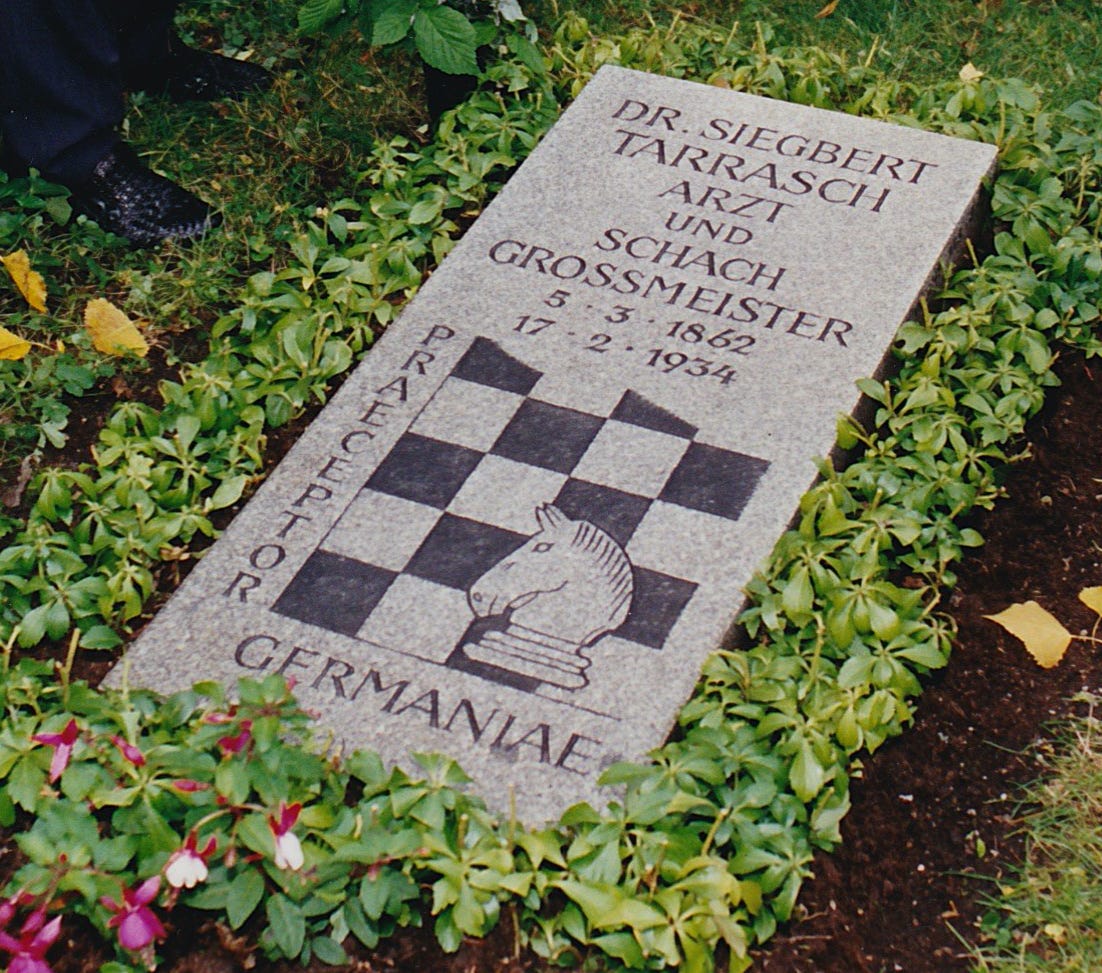
Siegbert Tarrasch was regarded as an uptight, hidebound traditionalist. He was also one of the strongest chess players of the late 19th and early 20th century. And he had an interesting habit: during matches, he sat on his hands.
After starting his career as a doctor in Bavaria, Tarrasch moved to Munich in 1914. Some say he was “more German than the Germans”. By all accounts, few people liked him. He dressed impeccably but was self-loving and looked down on others. Younger players would routinely get worked into a rage by Tarrasch because of his harsh, unsolicited analyses of the game they had just played.
A subsequent generation of talent – the hypermodernists – considered Tarrasch’s play to be lifeless; his rank was acquired through diligence rather than talent.
There is some truth to that. I wouldn’t say Tarrasch was a simple grinder. He had some incredibly useful heuristics and hacks, many of which were based on managing his intervention bias – our instinct to meddle and play the first seemingly good move. If you for whatever reason find yourself at a chess event, it’s likely that you’d see some younger players literally sitting on their hands. Eventually, they’ll learn to figuratively sit on their hands, but until then the posture helps prevent impulsively moving pieces.
Since most of my career has been spent as an analyst, I was more alert to the risk of analysis paralysis than of getting caught in a reactive loop. But after doing more operations, project management and portfolio work, it’s become clear that I was safely on one side of an ETTO distribution, where I faced diminishing returns to thoroughness. Now I routinely land on the side where hyperefficiency is the likely failure mode. It’s often worthwhile for me to proverbially, if not literally, sit on my hands.
Tarrasch’s amour-propre – his self-love – led to an obsession with being “proper”, which extended to his playstyle as a master. A rule of thumb already four centuries old by the time Lasker and Tarrasch were duking it out for the world title, is to always look for a better course of action, even if just for a few more moments. Tarrash was obsessed with finding a more proper move.
My version of this, in games other than chess, is that I frequently need to take a beat. My goal, of course, is not to get into a place where inaction is optimal, but to make sure my actions clear a bar that impulse can’t.
Operators have to be more passive than they might assume, especially if they are trying to get big things done with limited resources. It takes time to find creative, indirect options.
Other fields are full of examples where impulse can be harmful:
Soccer – goalkeepers almost always dive during penalty kicks, but statistically standing still is a good choice (if not the best).
Investing – among retail traders, activity is negatively correlated with returns.
Wildland fires – total suppression banked fuel for megafires.
Passivity is not a winning strategy by default, but it is worth hedging against intervention bias by taking a bit of time to consider the null move. This trick is stolen not from Tarrasch but from chess engines: pretend to pass. Engines do this to measure their opponent’s real threats. So if your position appears fine after you model a pass, there’s no a real urgency.
One problem is that inaction can look bad. Goalkeepers who don’t dive look like they’re not trying, even if the null move is the right one. So if you’re a busy bee by nature, but feel like impulse is getting in your way, you might want to get comfortable feeling uncomfortable.
Slow is safe, safe is smooth, and smooth is fast.
P.S. have you checked out the site for my book project?
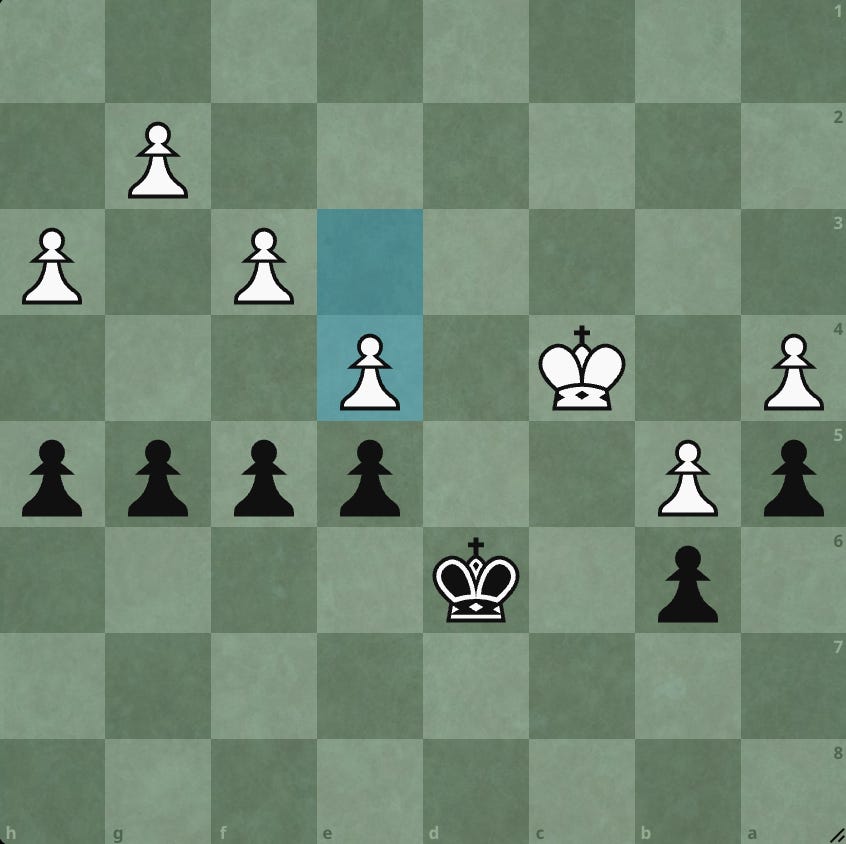
F4